


Macaronesian Gin - summer in a glass
February 15th, 2018 | Landgänge
Most people like to bring some holiday souvenir back home. Our case is usually full with sausage and cheese from local markets and sometimes we bring also a bottle of wine. On Tenerife, we spontaneously packed a bottle of gin and two glasses as souvenirs. Macaronesian Gin. To be honest, I didn’t even know exactly then, what is meant by ‘Macaronesian’.
Macaronesia is an old name for the island groups off the African coast in the Atlantic. Namely, the Azores, Madeira, the Cape Verde Islands and the Canary Islands. Actually the Macaronesian White Gin comes from one of the Canary Islands. It is distilled in the south of Tenerife, in San Miguel de Abona and was the first Gin ever produced in the Canary Islands.
Rather surprising, because the conditions on the islands are ideal for gin: excellent water filtered through lava rocks and botanicals growing locally favored by the Canary climate. So the Macaronesian Gin is characterized by a soft and balanced flavor and a very fine scent of juniper. Juniper abound in the laurel forests of the island. Other botanicals are angelica root, licorice, lemon and orange peel and cardamom. It tastes like summer in a glass.
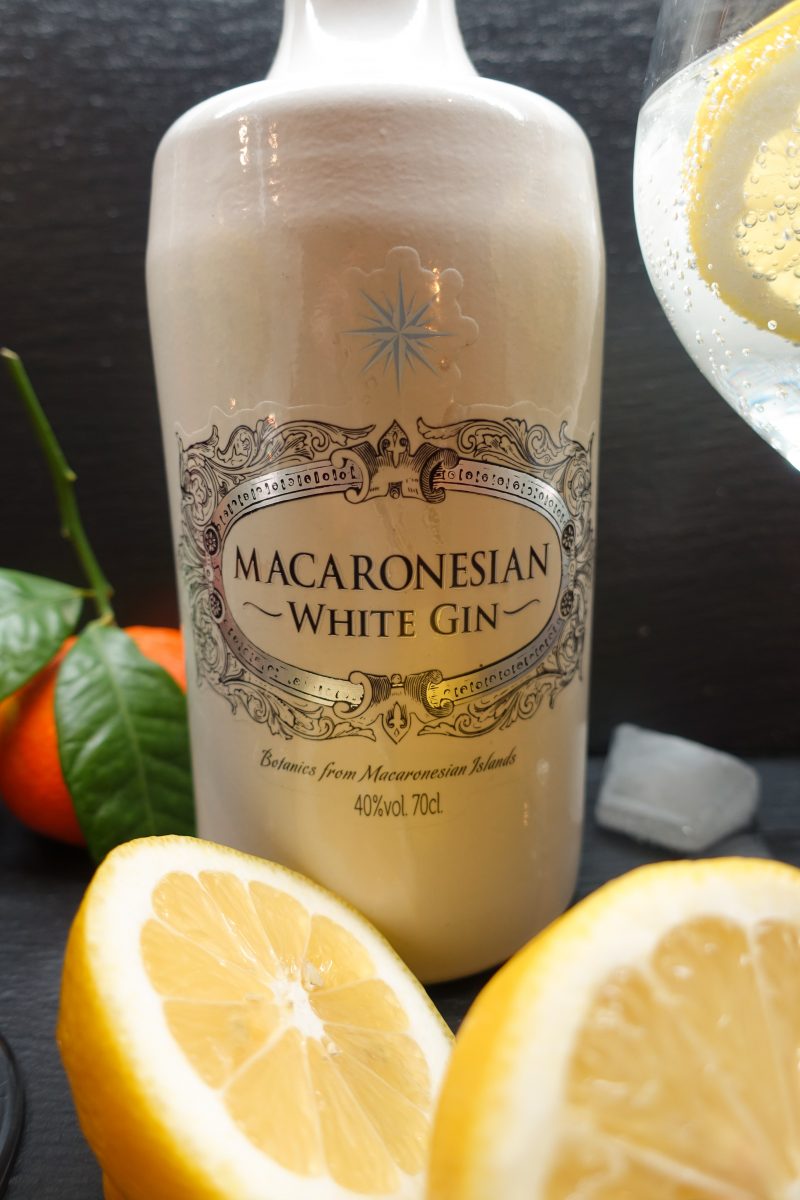
By the way, the ceramic bottle is “made in Germany”. This also explains why it seems to be so familiar, Gin Sul and Knut Hansen Gin come in very similar presentation. But their taste is somewhat rough, not at all like sun – but typical northern German.
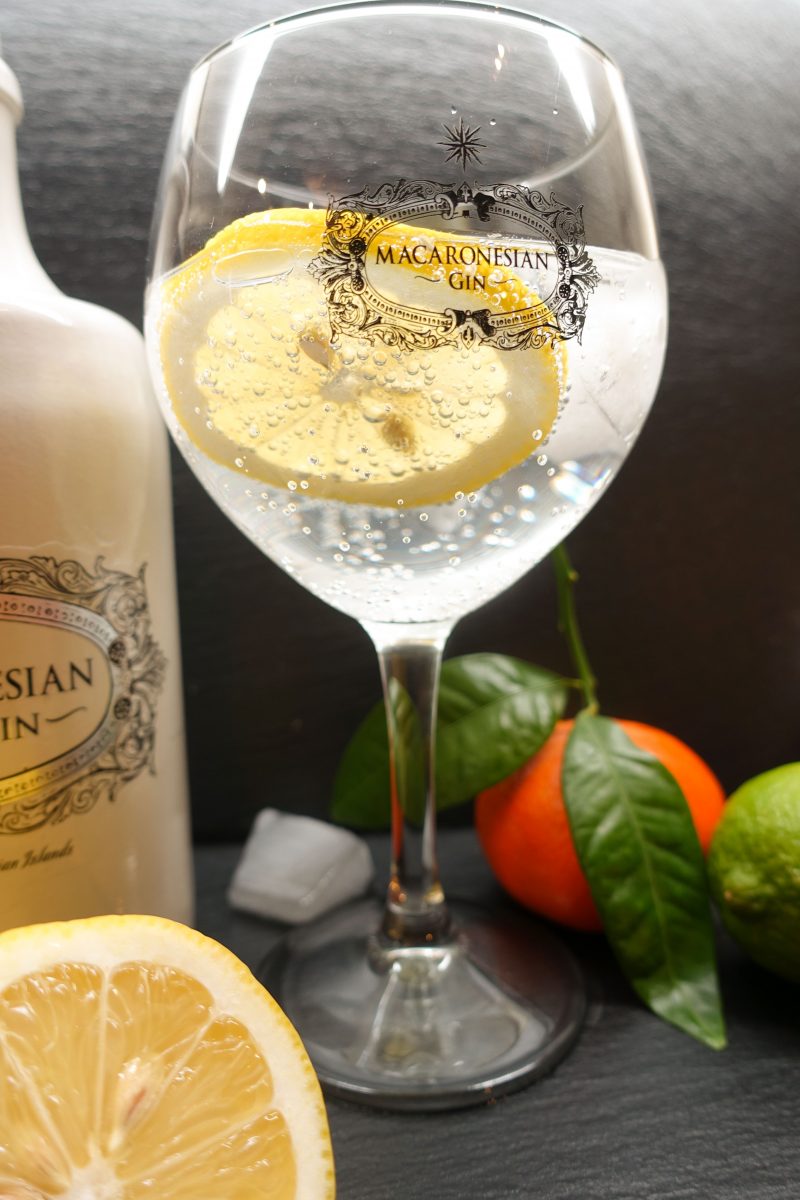
In Spain and Portugal Gin Tonic is served in bulbous balloon glasses. In these big glasses the flavors of the spices supplied can perfectly combine with the drink. I personally like this copa glasses rather than the classic longdrink glass the Gin Tonic is served in Germany. They simply look more elegant.
Gin in all variations seems to be much more popular in Spain than in Germany. The selection in the supermarket shelves or liquor stores is unmanageably large. Many different tonic waters are available that do not even exist on the German market.
The triumph of the gin in Spain apparently proceeded rapidly. The head of the distillery Santa Cruz, Diego Rombola, can still remember times, when gin was still not the fashionable drink that it is today. He said that there were bars using gin for cleaning because it is odourless. Well, times have changed and gin is in the truest sense of the word on everyone’s lips.
So, if there is room in your suitcase… Drinking a glass of Macaronesian Gin with tonic is the best way to be caught up in travel memories.


 Tags:
Tags: Leave me a message

„Heidschnucken“ Trail – 120 kilometers on foot
Almost a year has passed since we hiked the first 120 kilometers of the „Heidschnucken“ Trail in the Lüneburg Heath. It tingles in the feet to tackle the second half…
read more
Plaice Fillet with Lettuce and Peach
Sesame oil, or more precisely roasted sesame oil, makes this simple green salad taste so special. In combination with the sweetness of the peach and the fresh herbs this salad matches perfectly to the crunchy fried plaice. A light and fast summer meal.
read more
Asparagus & Strawberries – a dream team
May and June, fresh green, herbs in abundance, asparagus, strawberries, rhubarb – culinary the best time of the year. While asparagus was always associated with smoked ham and hollandaise sauce, asparagus is popular with us today as a salad or crunchy roasted. And the combination of salmon, asparagus, strawberries, pine nuts and fine oil is just gorgeous.
read more