

Stuffed Roscoff onions
March 22nd, 2019 | side dishes
Onions – in my kitchen nothing works without them. But whoever believes that one tastes like the other has not yet tasted Roscoff onions. The “l’oignon rosé” from Brittany, or Roscoff at Finistère in northwestern Brittany, is so fine and aromatic in taste that it easily becomes the main actor on the plate, for example as a stuffed onion.
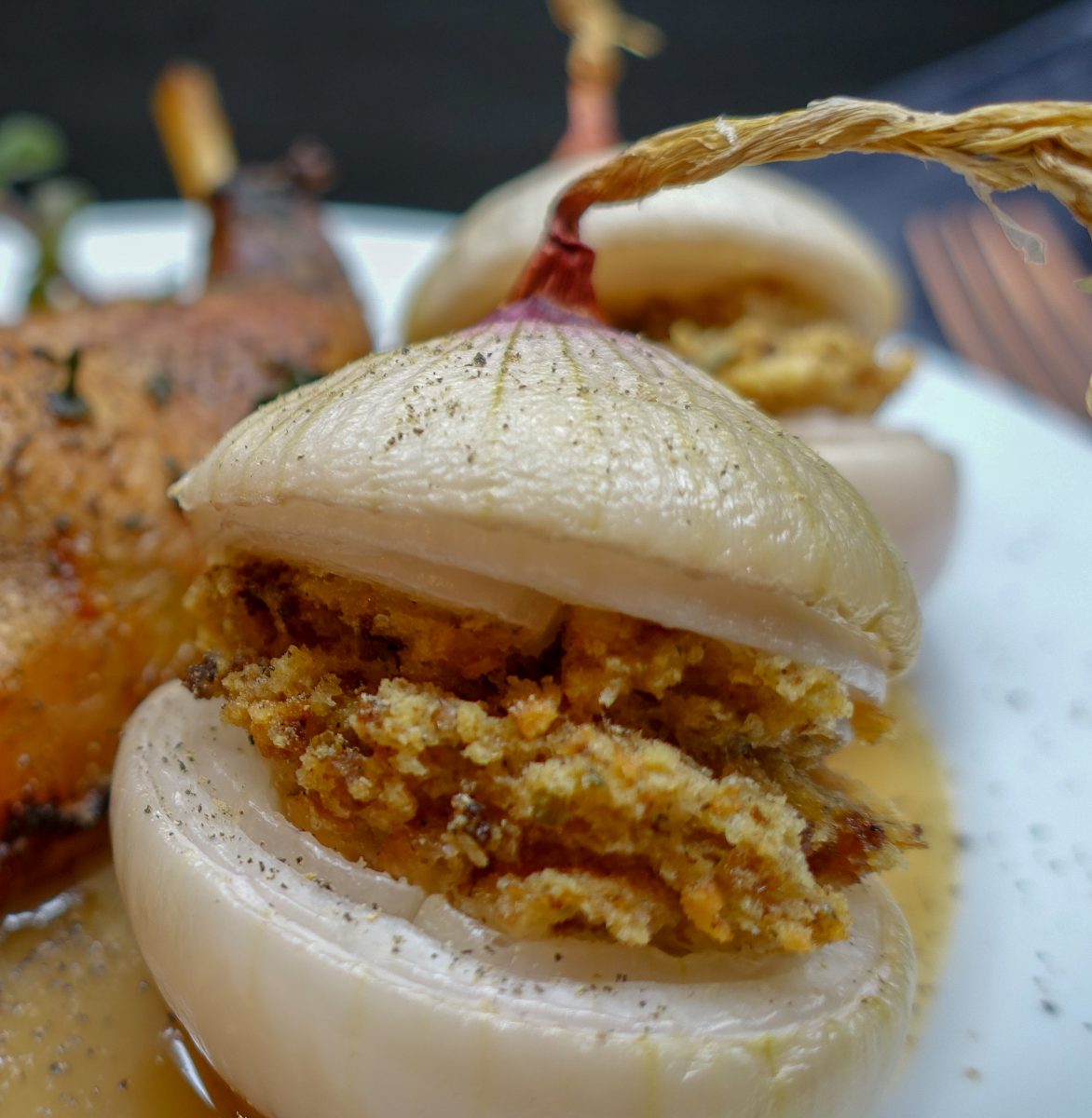
Having asked about my favorite vegetables, I have often called the onion because I use it most often of all the vegetables, almost daily. Of all the onions I know, the Roscoff onion is by far the finest and most delicious variety: tender pink flesh, crisp and in the cut it exudes an indescribable scent. Not just spicy like many other varieties, but aromatic, sweetly mild and savoury at the same time.

The Breton noble onion has been grown in Roscoff for over 400 years, now with a protected designation of origin. The cultivation requires much manual labor. For example, every single onion is pulled out of the ground one-third of the size one week before picking to dry on the field. According to ancient tradition, the Roscoff onions are then harvested and tied in braids – also by hand. They are storable for months.
Rich in vitamins A, B and C and durable, hundreds of years ago the Roscoff onion was a coveted vegetable among sailors to prevent vitamin deficiency on long passages.

In the early 19th century, Breton onion traders travelled to England to sell their onions there, wandering from town to town. The tradition of the “Johnnies”, as the English called the onion traders, still exists today and is celebrated every summer in Roscoff with a large onion festival (La fête de l’oignon rosé). Incidentally, the onion braids were then tied up in order to be able to transport as many onions as possible by bicycle – so bicycles decorated with onion braids today are the symbol of the great onion festival.
Quality and unique taste have their price. The Roscoff onion costs twice as much as its domestic relatives. And rightly so, because this vegetable even steals the show from many pieces of meat…

Stuffed Roscoff onions

(4 portions – cooking time: 1.5 hours)


 Tags:
Tags: Leave me a message

Really wild wild herbs salad
What they sell on the domestic German markets as “wild asparagus” botanically is no asparagus. Of course wild asparagus exists, and I know it from my time in northern Spain, where we collected the wild asparagus in nature. Here in Germany, however, the flower sprouts of the Pyrenean Star of Bethlehem are offered under this term, mostly grown in France. And it is really delicious. Raw or steamed, it tastes very intense. For a wild herb salad a “snappy” enrichment.
read more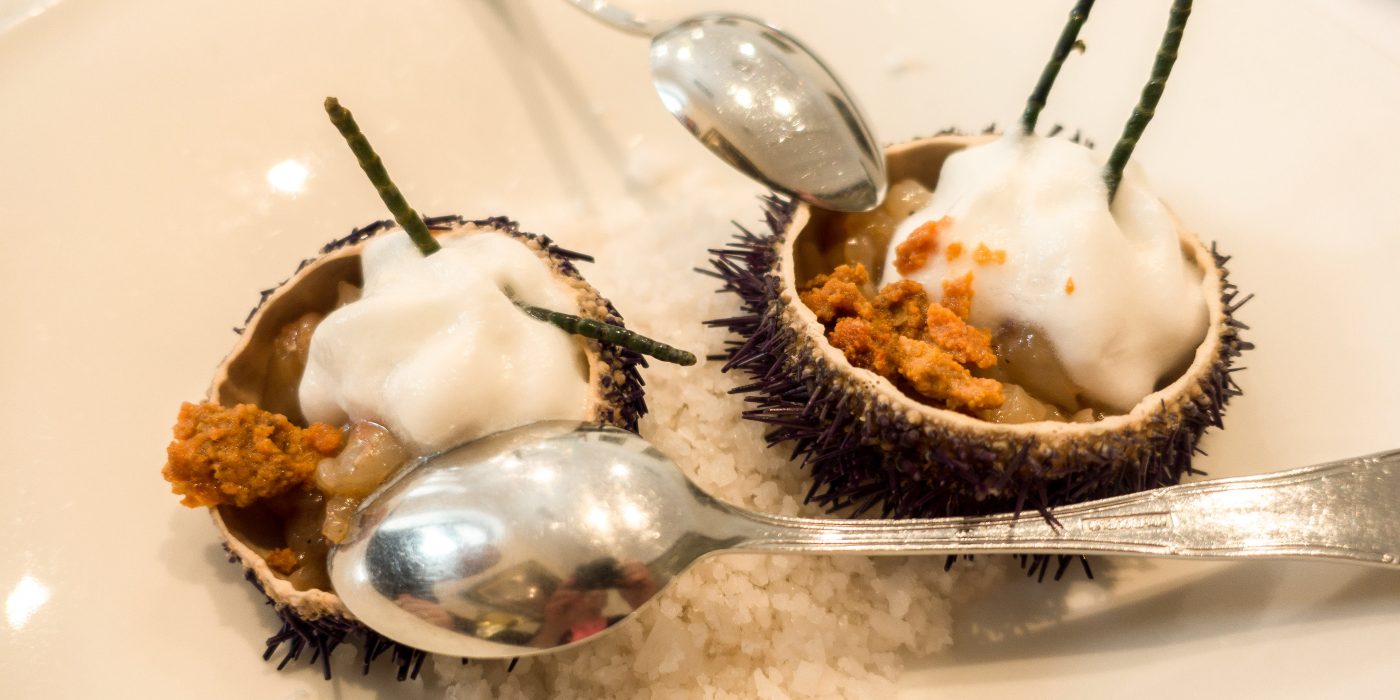
Cádiz/Spain: Sea urchin in the lighthouse
The restaurant El Faro (lighthouse) in the southern Spanish city of Cádiz again was such a pilot’s recommendation. As a local expert pilots do not only know the waters of their hometown, but also the culinary world. The recommendation for El Faro came from a true gourmet.
read more
Quinoa Avocado Bowl
In South America, quinoa, also called Inca rice, has been considered one of the most important staple foods for more than 5,000 years. In Europe, this grain has come in fashion only in recent years. Strictly speaking, it is no grain, but is botanically one of the goosefoot plants, is closely related to spinach, chard and beetroot. Anyway, in combination with avocado, cherry tomatoes and corn, we found quinoa very tasty, especially for the meatless days.
read more